Professional bar refrigeration equipment for drinks, wine and ice
Professional bar refrigeration equipment keeps drinks at a suitable temperature, stock organised and ice available when staff need it. A well-planned refrigeration station shortens movement behind the bar, reduces unnecessary door opening and supports fast, orderly service in bars, cafés, restaurants, hotels, clubs and other hospitality venues.
This Table-Line parent category connects three dedicated groups: bar refrigerators for bottles and cans, wine coolers with one or two temperature zones, and professional ice makers for different forms and quantities of ice. These appliances perform different tasks and do not replace one another.
Which type of bar refrigeration equipment do you need?
- Choose a bar refrigerator for organised cooling and quick access to bottled or canned drinks.
- Choose a wine cooler when suitable serving temperatures and dedicated bottle shelving are important.
- Choose an ice maker according to ice type, required output per 24 hours and demand during the busiest period.
Start with the menu and workflow. List the beverages, package formats, peak order volume, daily ice use and wine stock. Then define the installation position, required utilities, ventilation clearances and route between storage, preparation and service.
Bar refrigerators for bottles and cans
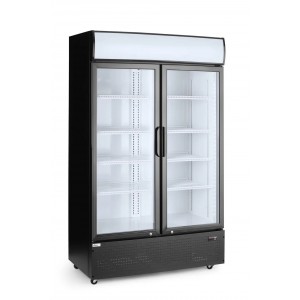
Glass-door bar refrigerators provide stock visibility without prolonged opening. Compact undercounter units suit individual workstations, while larger upright models provide more storage and visible merchandising. Compare external dimensions, rated volume, practical shelf layout, number of doors, temperature range and opening direction.
Hinged doors need clear space in front of the appliance, while sliding doors intrude less into a narrow aisle. Volume in litres alone does not show how many bottles or cans can be arranged efficiently. Account for package shape, shelf load limits and the space required for cold-air circulation.
Single- and dual-zone wine coolers
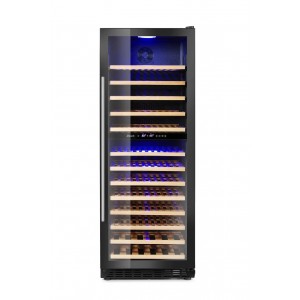
A wine cabinet is designed for wine bottles and is not the same as a general beverage refrigerator. A single-zone model suits a larger quantity of wine with a similar temperature target, while a dual-zone model allows separate settings, for example for white and red wines. Set temperatures according to the wine, service method and appliance instructions.
Rated bottle capacity is normally measured with a particular standard bottle and shelf arrangement. Wider bottles, sparkling-wine bottles and other shapes can reduce actual capacity. Also check shelf adjustability, door direction, protection from light, vibration and whether the model is intended for freestanding or built-in installation.
Ice makers and choosing the right type of ice
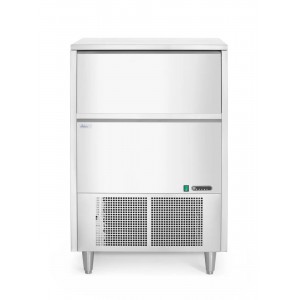
Select an ice maker according to how the ice will be used. Hollow and solid cubes melt and behave differently in drinks, while flake or granular ice suits other applications and displays. Compare rated output per 24 hours, storage-bin capacity, cooling method, electrical supply, water inlet and drainage requirements.
Daily production is not the quantity of ice available in the bin at every moment. Size the machine for peak demand and include a suitable reserve. Higher ambient or inlet-water temperatures may reduce output, and the bin is generally not a freezer for long-term ice storage.
How should you plan bar refrigeration capacity?
Estimate sales during the busiest hour, restocking frequency and the time available for newly loaded drinks to cool. Do not size a refrigerator only from all-day sales because it must also support sudden peaks. Loading many warm bottles increases the heat load and may temporarily raise cabinet temperature.
For ice, calculate use per drink, additional ice for chilling or display and the longest continuous service period. Separate ready-to-serve wine stock from any long-term storage requirement. A practical solution may combine a fast-access undercounter refrigerator, a dedicated wine cabinet and an ice maker selected for actual peak demand.
Installation, ventilation and utilities
Before ordering, measure the installation area, access route and space needed for doors, shelf removal and service. Place appliances on a level, stable surface with sufficient load capacity, away from ovens, dishwashers, radiators and direct sunlight. Do not enclose a unit in cabinetry unless it is designed for that installation.
Provide the specified ventilation clearances and a suitable electrical connection. An ice maker may also require a continuous potable-water supply, suitable pressure, filtration and a gravity or pumped drain. Check the instructions for the exact model; extension leads and overloaded circuits are not appropriate permanent solutions.
Water, condensation and efficient operation
Water quality affects the appearance and taste of ice and the formation of scale. Select appropriate filtration or softening according to local water and manufacturer requirements, and descale at the required intervals. Choose a filter for the treatment needed and inlet-water quality, not only its flow rate.
Condensation on glass doors can result from high humidity, frequent opening or a damaged gasket. Close doors promptly, do not pack cabinets so tightly that airflow is restricted, and maintain condenser and ventilation surfaces as instructed. Reducing unnecessary opening generally supports more stable temperatures and reduces appliance load.
Cleaning and safe handling
Spilled drinks, sticky residue, dust and deposits reduce hygiene and may affect operation. Regularly clean interiors, shelves, runners, gaskets, handles and drains using materials permitted by the manufacturer. Disconnect the appliance from the power supply before deep cleaning or dismantling.
Treat ice as food: use a clean dedicated scoop, never use a glass to collect ice and do not store the scoop in the ice. Clean and sanitise the ice maker according to its instructions, including components that contact water and ice. Refrigeration and electrical work should be performed by qualified service personnel.
Choose Table-Line bar refrigeration equipment
Before buying, compare the appliance purpose, capacity, temperature range, door or shelf design, ice type and output, utility connections, ventilation and cleaning requirements. Dedicated equipment for drinks, wine and ice helps use bar space more effectively, reduces unnecessary movement and supports consistent service during the busiest periods.