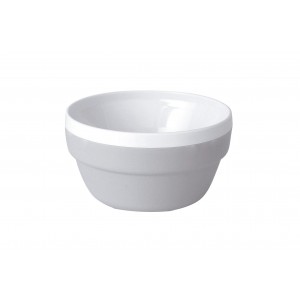
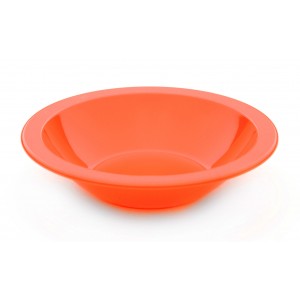
Polycarbonate bowls for soups, side dishes, salads and desserts
Polycarbonate bowls are a lightweight and durable solution for frequent food service in restaurants, catering operations, canteens, hospitals, care homes, nurseries, schools and other institutions. Different capacities, shapes, colours, handles and lids allow you to assemble a set according to the type of meal and the serving method.
The range includes bowls and lids made from copolyester, polycarbonate and polypropylene.
Which bowl do you need?
Start your selection with the type of food and portion size:
- ramekins and small dessert bowls are intended for sauces, accompaniments, desserts and smaller portions,
- cereal and side dish bowls are suitable for breakfast, fruit, snacks and smaller cold dishes,
- soup bowls provide greater depth and capacity for liquid dishes,
- two-handled bowls can provide a more stable two-handed grip,
- larger salad bowls are intended for shared serving or larger quantities,
- isothermal bowls feature a special construction that helps maintain the temperature of their contents for up to 60 minutes.
Soup bowls
When choosing a soup bowl, consider its capacity, depth, base stability and the amount of space below the rim. The 355 ml polycarbonate soup bowl is intended for a smaller portion, while the greater filled weight of larger models should also be considered.
The stated capacity indicates the volume up to the rim and is not necessarily the recommended working capacity. When serving hot soup or carrying the bowl on a tray, leave enough space below the rim to reduce the risk of spills. Adjust the temperature of the contents according to the product instructions and user safety requirements.
Two-handled bowls
The 450 ml copolyester soup bowl with two handles can be held with both hands. This design can be useful during service and for certain users with reduced grip strength or dexterity.
Isothermal bowls and temperature retention
The 450 ml polypropylene isothermal bowl is constructed differently from a conventional single-wall bowl and helps maintain the temperature of hot or cold food for up to 60 minutes. The result depends on the initial temperature, duration, use of the lid, quantity of food and surrounding conditions.
Bowls for cereals, desserts and smaller portions
For cereals, fruit, puddings, ice cream and side dishes, choose models with capacities from 150 to 450 ml. The 350 ml copolyester bowl is a versatile option for smaller meals, while square and coloured designs offer different presentation options. A small 45 ml ramekin bowl is intended for a significantly smaller portion than a soup bowl.
Larger bowls for salads and shared serving
The 2.5 litre copolyester salad bowl is intended for larger quantities or shared serving.
Copolyester, polycarbonate and polypropylene
Copolyester is a high-quality material that is free from BPA and melamine. It is virtually unbreakable, lightweight, stain-resistant and suitable for frequent professional use. It also provides a high-quality appearance. Its temperature range is from –20 to +85 °C.
Polycarbonate is an exceptionally strong, lightweight and virtually unbreakable material. It is suitable for intensive use and washing in a dishwasher. Its temperature range is up to +85 °C, while certain products are suitable for temperatures up to +140 °C.
Polypropylene is a lightweight, durable and more affordable material that is free from BPA and melamine. It is resistant to impacts, chemicals and stains, making it suitable for everyday use. Its temperature range is from –20 to +90 °C.
Bowl lids and compatibility checks
The category includes separate lids made from polycarbonate, polypropylene and copolyester, as well as bowls supplied with a lid as part of the set. A lid can help with organised meal distribution and protecting the contents, but it is not necessarily leakproof and does not provide thermal insulation. Choose the lid according to the exact product code, series, capacity and bowl rim profile. A similar capacity or diameter does not guarantee that a lid will be compatible with the bowl.
Colours, transparency and meal organisation
A transparent bowl provides a clear view of its contents, while coloured rims and patterns can help identify a set, department or type of meal. For users with visual impairments, the contrast between the bowl, food and background may make items easier to distinguish. However, the effect depends on the specific colour combination, lighting conditions and the individual user.
Washing, stacking and inspecting for damage
Clean the bowls before first use and after every meal in accordance with the manufacturer's instructions. Use the permitted temperature, a suitable detergent and a dishwasher rack that prevents the items from turning over and retaining dirty water. Abrasive cleaning tools and harsh chemicals may damage the surface. Allow the bowls to dry completely before stacking. Remove bowls and lids from use if they have cracks, deep scratches, deformations, damaged handles or rims, or can no longer be cleaned hygienically.
Choose Table-Line polycarbonate bowls
Before purchasing, determine the type of food, portion size, temperature of the contents, intended user, carrying method, washing procedure and whether a lid is required. Then compare the material, capacity, depth, handles, colour and compatible accessories. This will help you select a functional bowl system for organised and consistent food service.