Commercial juicers and blenders for freshly prepared drinks
Commercial juicers and blenders support fast preparation of fresh juice, smoothies, cocktails and iced drinks to order. The right machine shortens preparation time, improves consistency and makes work easier in bars, cafés, restaurants, hotels, breakfast service and specialist beverage outlets.
The Table-Line range includes manual and electric citrus juicers, fruit and vegetable juice extractors, commercial blenders in several capacities, models with sound enclosures and replacement jugs. These machines do not produce the same result: an extractor separates juice from most of the pulp, while a blender processes the added ingredients together.
What is the difference between a juicer, citrus press and blender?
- A citrus juicer extracts juice from lemons, limes, oranges and other suitable citrus fruit. Manual and electric versions are available.
- A juice extractor processes fruit or vegetables and separates the liquid from the pulp.
- A blender cuts and mixes the ingredients into a uniform drink, generally retaining more fibre. It is used for smoothies, cocktails, sauces and other blended preparations.
- A blender jug is a replacement or additional component. Compatibility must be checked against the exact appliance model.
Electric citrus juicers speed up repetitive service
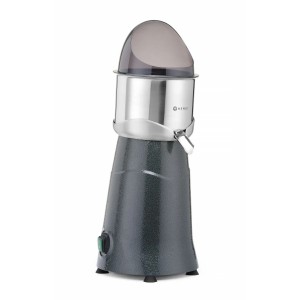
An electric citrus juicer is useful when orange, lemon or grapefruit juice is prepared frequently. Compare power, rotational speed, pressure method, cone sizes, splash protection and removable parts.
The 230 V/180 W electric citrus juicer includes three interchangeable cones for different citrus sizes, a stainless-steel pressing bowl and a splash shield. The 230 V/230 W electric citrus juicer uses a lever and has a removable stainless-steel bowl and cone.
Manual squeezers suit individual servings
Manual lime, lemon and orange squeezers are practical for cocktails and lower-volume preparation. They require no electrical connection but take more time and physical effort during busy service. Cut the fruit to a suitable size and inspect the mechanism before use.
A colour-coded manual orange squeezer helps staff identify the intended citrus size quickly.
Juice extractors separate liquid from pulp
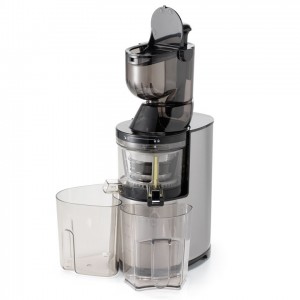
Choose an extractor when the required result is a liquid juice with separately collected pulp. Consider the feed opening, pulp-container capacity, rotational speed, stated production rate and cleaning time.
The 230 V/700 W juice extractor is described as suitable for hard and soft fruit and vegetables. It has a 7-litre pulp container and a stated production capacity of up to 120 kg per hour. It operates only when the lid and safety arm are locked in place and is not suitable for ice or frozen produce.
The 230 V/500 W juice extractor offers a different output and pulp-container size. Do not apply one model's production figure to the entire category.
Commercial blenders prepare smoothies and cocktails
Compare jug capacity, motor power, speed range, pulse control, permitted ingredients, recommended cycle length and noise. Nominal capacity is not necessarily the safe working volume, because space is required for ingredient movement and expansion.
The 2.5 L, 230 V/1680 W commercial blender has touch controls, three speeds and a pulse function. Only crush ice or frozen ingredients when the individual model is expressly approved for this use.
A sound enclosure reduces noise near guests
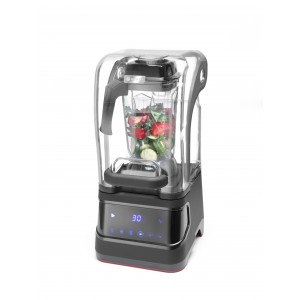
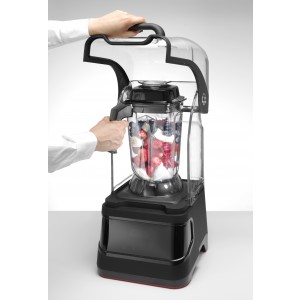
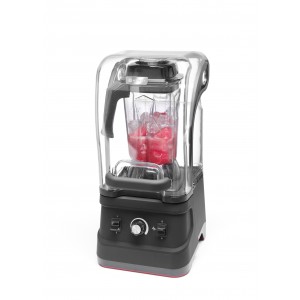
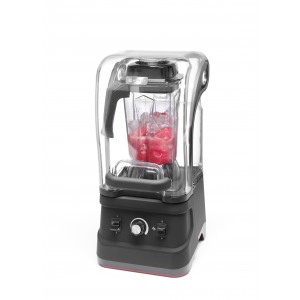
A blender operating in an open bar, café or breakfast area can interrupt conversation. A closed polycarbonate enclosure reduces sound transmission but does not make the machine silent.
The 230 V/1680 W blender with sound enclosure has a 2.5-litre jug, continuously variable speed, pulse control and a safety system that prevents operation without the jug correctly fitted.
Match capacity to serving size and peak demand
Consider the normal serving, consecutive orders and permitted working volume. An additional compatible jug may be more practical than an oversized blender. Measure appliance height, the clearance required to open a sound enclosure, worktop depth, access to a suitable socket and the route to the washing area.
Correct ingredient preparation protects the machine
- Wash produce and remove unsuitable hard or inedible parts.
- Cut larger ingredients to fit the feed tube or jug.
- Use only the supplied pusher in an extractor.
- Never fill a blender jug above its permitted mark.
- Process hot liquids, ice and frozen ingredients only when expressly allowed.
Clean the machine promptly after preparation
Disconnect the appliance before dismantling it. Never immerse the motor unit. Avoid direct hand contact with sharp blades and grating discs. Wash only components explicitly marked as dishwasher safe and dry every part before reassembly.
When changing between recipes containing allergens, follow a documented cleaning procedure to reduce cross-contact risks.
A replacement jug must match the exact blender
The category includes two 2.5-litre blender jugs. Equal volume does not guarantee compatibility. Check the base shape, drive coupling, blade, lid, safety mechanism and appliance product code before ordering.
Table-Line helps match the machine to your service
Provide the drinks you intend to offer, servings per hour, common ingredients, required capacity and available space. This makes it easier to compare a manual or electric citrus juicer, juice extractor, standard blender or sound-enclosed model.